

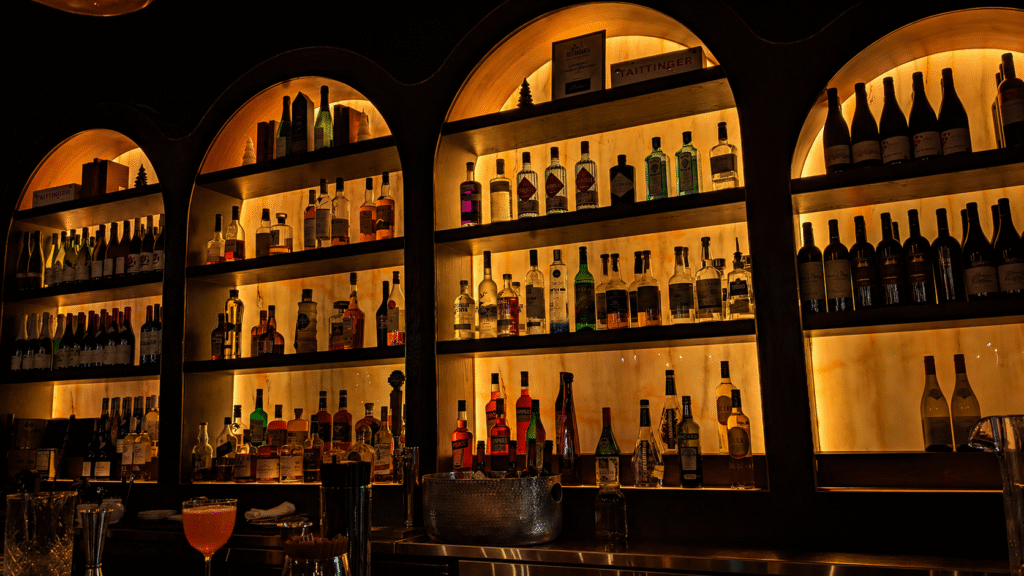
Well-crafted classic cocktails with a French twist make the bar at Élise a worthwhile sipping destination.
Élise
381B Winona Ave
Tues-Wed: 11 AM – 10 PM; Thurs-Sat: 11 AM – 12 AM; Sun: 10 AM – 2 PM & 5 pm – 10 PM
Closed Monday
French brasseries are hardly new to Westboro. Savoy Brasserie arrived on Richmond Road in 2013 with the kind of schedule that made the format useful: breakfast in the morning, oysters and wine after work, dinner at night, cocktails if nobody felt like going home.
Savoy eventually gave way to Goldfinch, and Goldfinch closed in early 2026. Yet the idea behind the restaurant survived. Westboro still had room for a place that could move easily from coffee to lunch to dinner without behaving like three separate businesses.
A short walk along Richmond Road, Élise has taken up that role. It is not a Savoy revival, nor does it try to be. The room is more modern and luxurious, the bar is far more ambitious, and the restaurant has a contemporary Ottawa identity.
A neighbourhood brasserie without the Paris pastiche
Élise opened in 2024 on the ground floor of a Richmond Road condominium. The name refers to Eliza Lowry, whose family once owned land in the area.
Owner John Thomas wanted the flexibility of a French brasserie, but not the theatrical version of France that restaurants sometimes fall back on. There are no attempts to make the room look a century old. Instead, Élise feels purpose-built for its neighbourhood.
You can stop in for coffee, meet someone over lunch, order steak frites before a show, or take a seat at the bar later in the evening. The kitchen runs one menu throughout the day, and the restaurant stays open until midnight from Thursday through Saturday. Those hours make a difference in a city where finding a proper meal at odd hours requires planning.
Walk-ins are welcome at the eleven-seat bar. On busy nights, it is also where the restaurant makes the most sense. You can watch the staff work, order one drink, or stay longer than expected. Regulars from the neighbourhood appear to have figured this out.
The Art Deco influence is clear: marble, dark finishes, carefully placed lighting, Riedel stemware, and handsome cocktail glasses give the dining room a dressed-up quality. It is one of the more sophisticated spaces in the neighbourhood. The open kitchen helps. Cooks moving behind the pass add energy to the room.
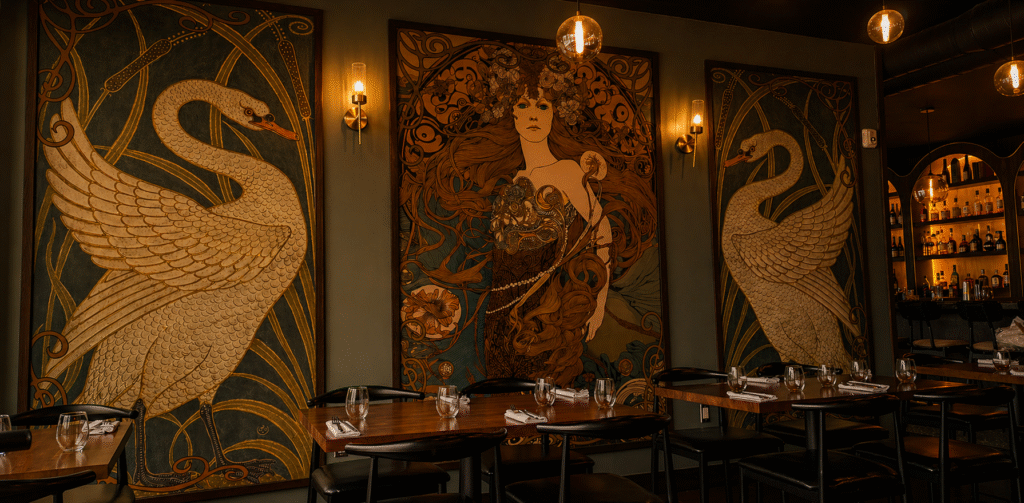
Élise works just as well after dinner, when the bar becomes the focus. The room is dim enough to settle into over a drink, but you can still see the food in front of you. Restaurant lighting should not be remarkable, but anyone who has tried to read a menu by candlelight knows that it often is.
Service has been polished across my visits. Hosts acknowledge guests quickly, water does not sit empty for long, and servers understand when to approach and when to leave a table alone.
The bar shows how much range the staff need. During the day, servers handle cappuccinos and lunch service. By evening, bartenders are measuring Calvados and mezcal into chilled glassware. The transition looks easy, which usually means plenty of work has gone into making it so.
A neighbourhood brasserie without the Paris pastiche
Wine is the expected drink at a French brasserie. At Élise, cocktails make an equally convincing case.
The list changes every few months and includes nine house cocktails plus three without alcohol. Most of the signatures begin with a recognizable idea. The French character comes through in the spirits and modifiers: Calvados, Lillet Blanc, Ricard, Chambord, Domaine de Canton, St-Germain, and brandy all make appearances.
The bar is not trying to impress guests with a catalogue of clarification, fermentation, or fat washing. That sort of technique can produce excellent drinks, but it can also turn a cocktail menu into homework. Élise takes the more direct route. The drinks taste balanced, look elegant, and arrive in glassware chosen for the recipe.
The garnishes are similarly elegant and minimalist: a dehydrated citrus wheel, expressed peel, or edible flower.
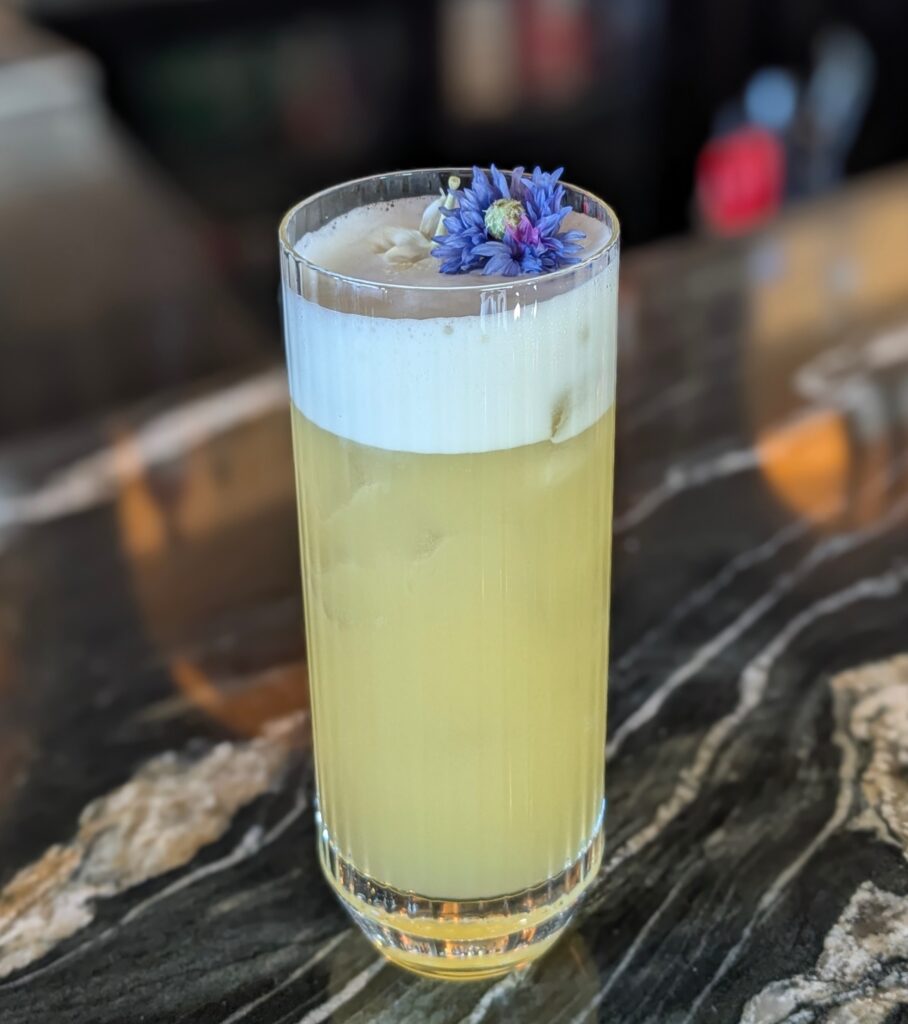
Blanche de Normandie ($13): a low-ABV highball built around Calvados. Light and refreshing, it carries gentle apple notes and a clean acidity. Served in a fluted glass with an edible flower, it functions well as an opening drink or for those moderating alcohol intake.
Royale d’Agave ($18): This cocktail combines mezcal, tequila, and Lillet Blanc. The result is softly smoky, with agave syrup providing measured sweetness. It is a composed, accessible interpretation of agave spirits within a French framework.
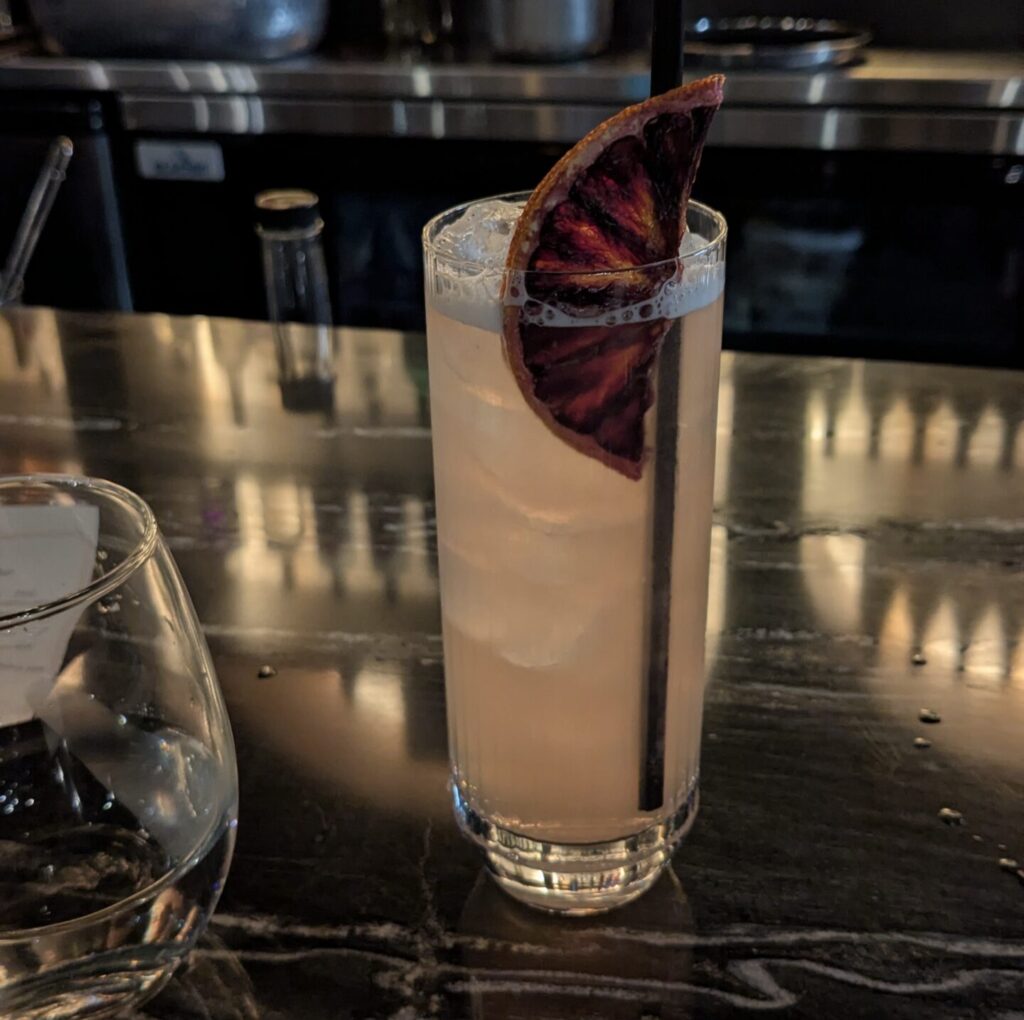
Avion Français ($15): This Paper Plane riff uses Calvados in place of bourbon. Equal parts Lillet, Aperol, and lemon juice create a profile that is slightly bitter, lightly sweet, and rounded by the apple brandy’s depth.
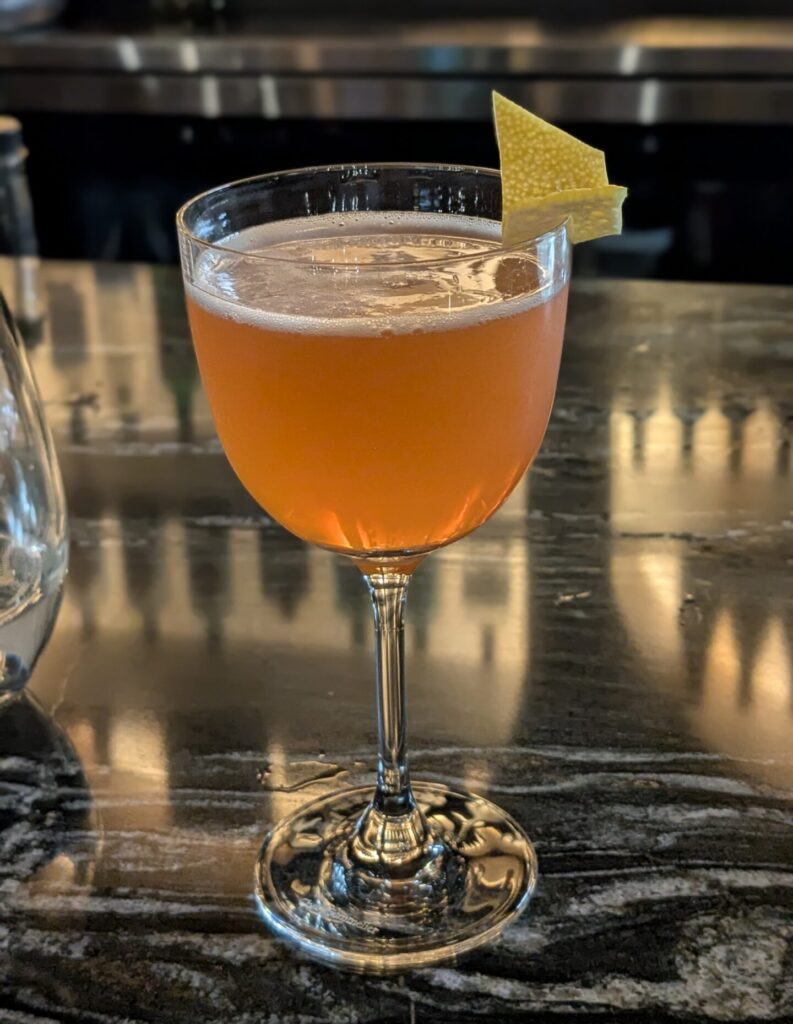
None of these cocktails are complicated for the sake of being complicated. That is their strength. They belong beside the food and still hold up if drinks are the only reason you came.
The wine list has more depth than many neighbourhood restaurants attempt. France receives the most attention, as it should here, but the cellar also reaches into Italy, Spain, New Zealand, Argentina, and Canada.
There is enough by-the-glass for casual drinking, while the bottle list rewards a closer look. Chablis and Sancerre sit alongside Barolo, Châteauneuf-du-Pape, Pauillac, and Margaux. The range allows for a reasonably priced glass after work or a more serious bottle over dinner.
French technique, without a frozen-in-time menu
Chef Nouk Couturier-Bernard, previously at Restaurant e18hteen, leads the kitchen. His menu has a clear French foundation, but the food does not feel bound to a checklist of brasserie standards.
The classics are present. There are oysters, raw seafood, tartares, escargots, steak frites, duck breast, and crème brûlée. Seasonal dishes bring a lighter touch and give regular guests something new to order.
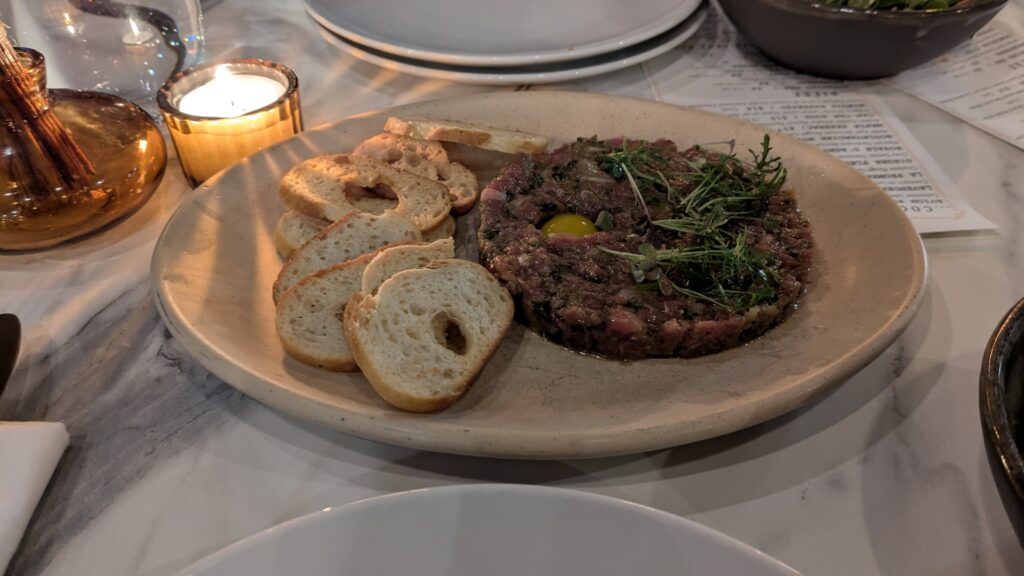
Beef tartare ($27): This plate is well composed, layering savoury and salty flavours with added texture from egg yolk and a subtle heat from house-fermented hot sauce.
Steak frites ($45): One of the restaurant’s defining plates and it delivers on expectation. The striploin is cooked accurately, well-seasoned, and properly rested. The fries are crisp and well executed, if slightly heavy on salt. The absence of a traditional béarnaise is noticeable but not detrimental.
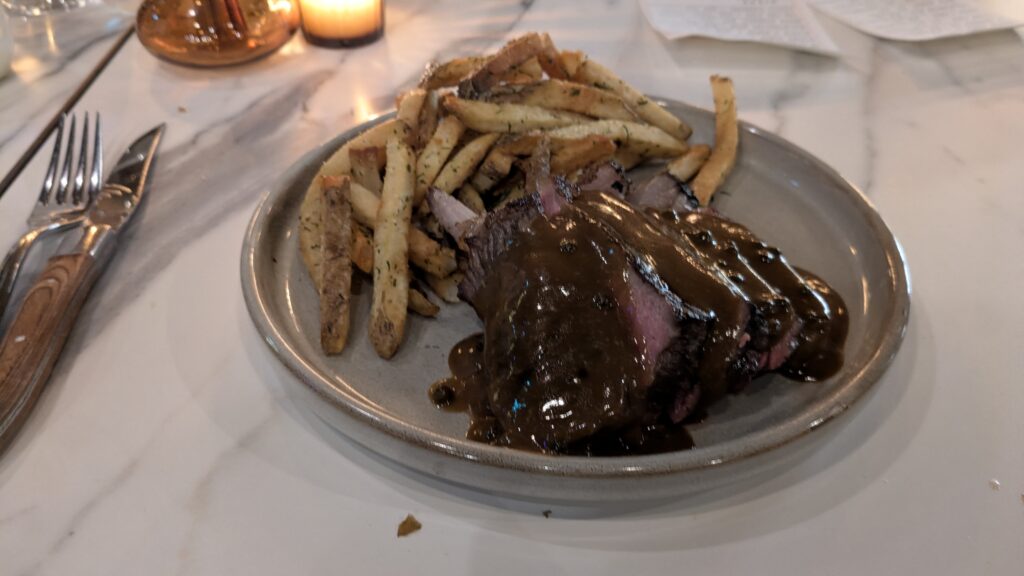
Nice to know: One of the more compelling reasons to visit is value. The Sunday steak frites offering at $35 positions Élise as one of the stronger propositions in the area, particularly at a time when several neighbourhood staples have either closed or shifted focus.
Where Élise fits in Ottawa's restaurant scene
Gitanes is probably Élise’s closest relative in Ottawa. Both look to France without treating tradition as a fixed set of rules. Both pay serious attention to wine and cocktails.
The resemblance only goes so far. Gitanes is more adventurous and has earned national attention for that reason. Élise is easier to fold into ordinary life. It feels like a restaurant for its neighbourhood first, rather than a destination restaurant.
Élise can handle a special occasion dinner, but it does not require one. The bar makes room for a spontaneous drink. The long hours encourage people to arrive at any time. The menu works whether the table wants oysters and cocktails or a full dinner with Burgundy.
The Savoy laid the groundwork, but Élise feels like the concept after a decade of refinement. The dining room has confidence. The bar can stand on its own. The kitchen understands when to respect a classic and when to loosen it.
A restaurant this refined could easily become formal or remote. Élise avoids that. The best seat may still be the bar, with a cocktail in front of you and no particular reason to leave.
[…] options. Residents already have access to quality drinks at establishments such as Lexington, Élise, and Bar Lupulus. Long-standing lounges like Trio and 10Fourteen continue to serve guests into the […]